



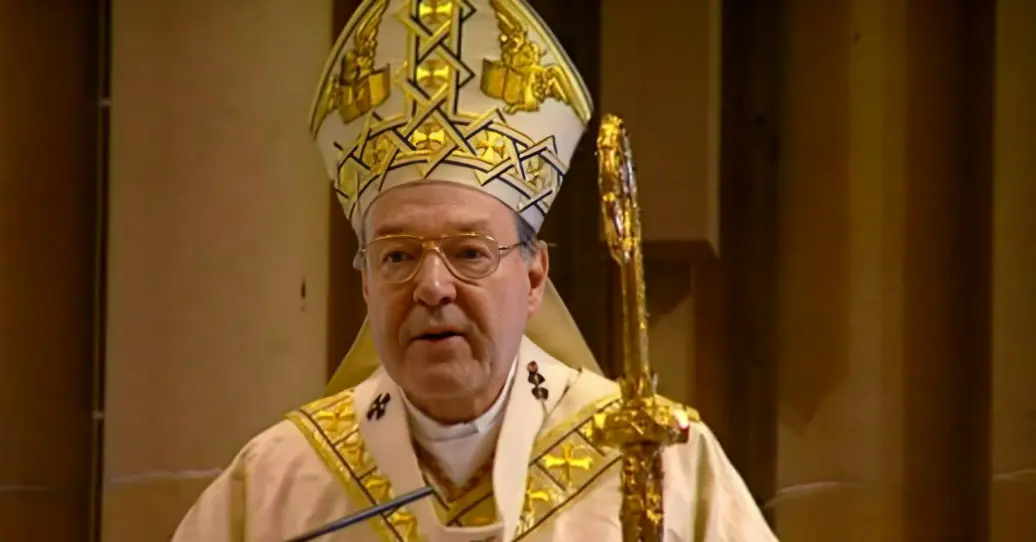
When Australians reflect on George Pell’s life, career and legacy, many also wonder about his net worth. Cardinal George Pell, one of the most prominent Catholic figures to emerge from Australia, held senior roles both locally and in Rome. When people ask about his finances, they often question whether he lived like a typical religious leader or as a wealthy public figure. The reality is much simpler than many expect.
In this article we know about his personal finances, how church roles are supported financially, and what was reported after his death.
Who was George Pell?
George Pell was born in 1941 in the Victorian town of Ballarat. He became a Catholic priest in 1966 and quickly advanced through the Church hierarchy. He served as Archbishop of Melbourne for several years before becoming Archbishop of Sydney. In 2003, he was elevated to the rank of cardinal, one of the most senior roles within the Catholic Church.
He later relocated to Rome, where he took responsibility for overseeing the Vatican’s financial operations. In this position, he oversaw large institutional budgets. Despite this high-level role, the funds he managed were institutional, and he did not personally own or use that money for himself.
He died in January 2023 at the age of 81 due to health complications from hip surgery.
George Pell net worth: what was reported?
When discussing George Pell’s net worth, it’s important to distinguish between personal wealth and institutional responsibility.
There was no formal record or public document revealing his exact personal wealth. However, some sources suggest that George Pell net worth at the time of his death was around $2.5 million. This is a rough estimate, not a validated value.
Following his death, it was revealed that he had left money for friends and relatives. One report indicated that his sister received approximately $100,000. However, the full value of his estate has not been officially disclosed.
This level of wealth is considered moderate when compared to corporate leaders, celebrities, and entrepreneurs.
How church leaders are financially supported
Many people misunderstand how senior Catholic officials are supported financially. Given the size and resources of the Catholic Church, it is easy to assume that high-ranking leaders are personally wealthy. In reality, the system works differently.
Archbishops and cardinals usually receive the following:
- A salary or allowance set by the Church
- Housing provided by the Church
- Travel expenditures for official duties are covered
- Living costs are controlled by church structures
In other words, they may be wealthy, but they won’t amass private fortunes like CEOs.
Pell was dealing with massive financial budgets at the Vatican, which belonged to the Church as an institution. They weren’t his personal property.
Public debate and legal battles
George Pell’s life was marked by serious controversy. He was facing serious legal charges in connection with previous allegations of child sexual assault. He was convicted in 2018, but the High Court of Australia overturned the decision in 2020, releasing him from prison.
These incidents influenced many Australians’ perceptions of his legacy. To others, he remained a major church leader at the highest levels. Others find his position throughout abuse scandals within the church disconcerting.
The public debate surrounding his life sometimes overshadows his personal wealth.
Was George Pell wealthy?
The reported estate is worth around 2.5 million dollars. Pell was financially comfortable by Australian standards. However, it is not comparable to the riches of large business owners, real estate developers, or media stars.
Pell dedicated a large portion of his life to religious work. He did not conduct private businesses, market products, or establish commercial operations. He made a living by helping in the church.
He did not have the financial resources of a man who had worked in the private sector but he had held major leadership roles in the church for many years.
Why people remain curious?
Australians are constantly interested in the net worths of public figures. When you have a significant position, particularly at a global institution, people naturally want to know what it means financially.
The mystery surrounding George Pell’s personal wealth is also linked to his work managing Vatican finances. Being attached to large costs can lead others to believe you are personally wealthy. However, the structure of church finances contradicts these assumptions.
Conclusion
George Pell was one of the most influential Catholics in Australian history. He has a decades-long career in leadership, both domestically and internationally. He worked in big institutions. He appears to have been reasonably rich when compared to high-profile business or entertainment figures.
The fundamental takeaway from George Pell’s net worth is simple: there is a difference between managing institutional money and possessing a personal fortune. According to public records, his estate was in the low millions, which is not typical of big private fortunes.