


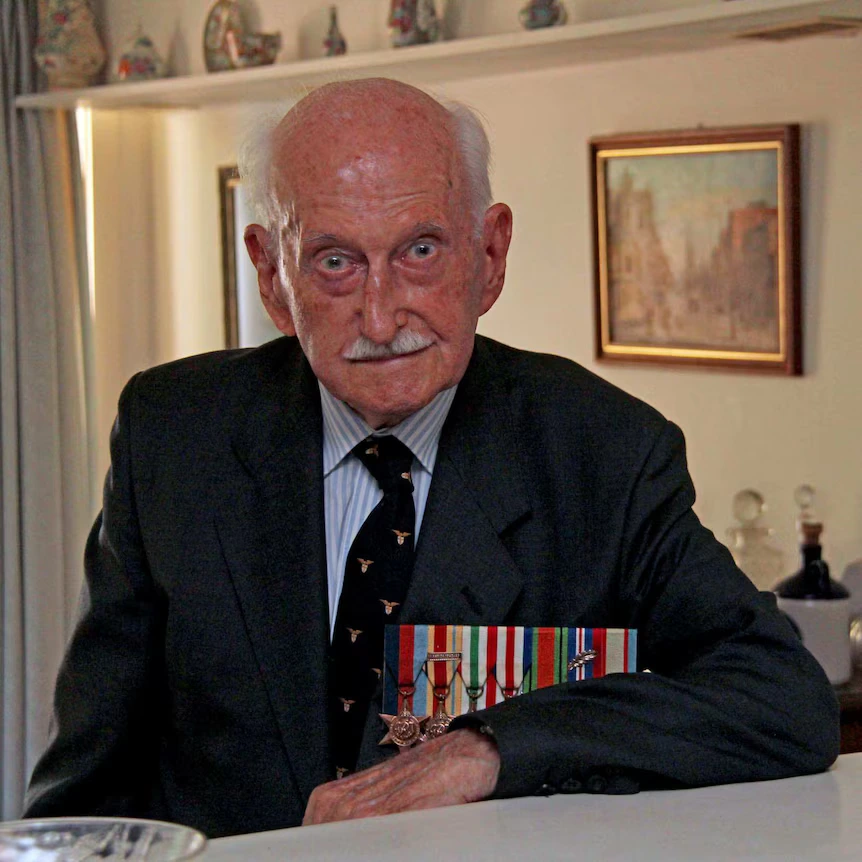
Murray Adams was an Australian fighter pilot who served with the Royal Australian Air Force during the Second World War. Born in Victoria in 1919, he flew dangerous missions across North Africa and Europe, survived being shot down and became an experienced wartime pilot. His life remains an interesting part of Australian aviation and military history.
Adams flew aircraft including the famous Supermarine Spitfire and Hawker Tempest. During his service, he faced conditions that are difficult to imagine today. His experiences provide a personal look at the risks taken by Australian airmen during World War II.
Who was Murray Adams?
Murray Adams was born on 15 July 1919 in Hawthorn, Victoria. He attended Mansfield Primary School, Trinity Grammar School and Swinburne Technical College. Before entering military service, he worked as a grazier.
He joined the Royal Australian Air Force on 18 September 1940. Despite beginning with limited aviation experience, Adams trained as a pilot and eventually reached the rank of Flight Lieutenant. His RAAF service continued until 25 August 1945.
Murray Adams and his RAAF career
During World War II, Adams served in several regions, including North Africa, Italy and Western Europe. His duties placed him in dangerous situations where fighter pilots regularly faced enemy aircraft, ground fire and difficult flying conditions.
The Supermarine Spitfire became an important aircraft in his wartime career. Adams also flew the Hawker Tempest and later spoke positively about its speed, power and performance.
Shot down in North Africa
One of the most dramatic moments of Murray Adams’ career occurred in December 1941. His aircraft was shot down over North Africa, forcing him to make an emergency landing in the Libyan desert.
Adams survived the incident. According to memories later shared by his daughter Rosemary Adams, he removed a clock from the damaged aircraft and used it while trying to find his way towards safety. He kept the clock after the war as a reminder of the experience.
A remarkable high-altitude flight
Another extraordinary chapter in Adams’ story came in 1943 when he flew a specially modified Spitfire to around 45,000 feet. The aircraft did not have the modern pressurised cockpit technology that pilots rely on today.
The mission was linked to attempts to counter German reconnaissance aircraft flying at very high altitudes. Adams later recalled being able to see an enormous distance from the aircraft, including what appeared to be the curvature of the Earth.
Murray Adams and D-Day
Adams also participated in operations connected with the Allied campaign in Western Europe. Following the D-Day landings in June 1944, Allied air power played an important role in supporting troops and maintaining control of the skies.
One of Adams’ notable experiences involved leading a formation of 34 aircraft across France after D-Day. Such an operation required considerable flying experience, navigation skills and coordination between pilots.
Life after World War II
Murray Adams completed his RAAF service in August 1945 and returned to civilian life. He later lived in Queensland while maintaining a strong interest in aviation, military history and the experiences of fellow veterans.
His daughter Rosemary has helped preserve memories of her father’s life. Adams reportedly enjoyed reading history, telling stories and writing about wartime experiences. He was also interested in practical craftsmanship involving materials such as wood and metal.
Murray Adams family
Public information about Murray Adams’ private family life is relatively limited. His daughter, Rosemary Adams, has spoken publicly about her father and helped ensure that his wartime experiences were remembered.
Rather than seeking public attention, Adams became best known through his military service and the remarkable stories he shared about flying during World War II.
When did Murray Adams die?
Murray Adams died on 5 October 2015 in Benowa, Queensland. He was 96 years old, having lived through almost a century of major changes in aviation, technology and Australian society.
His final resting place is recorded at Mansfield Public Cemetery in Victoria. His story continued to receive recognition after his death, particularly through commemorations honouring Australian and Allied wartime pilots.
Murray Adams’ legacy
Murray Adams is remembered as one of the Australians who served in the skies during World War II. His experiences included surviving a crash landing, flying at extreme altitude and taking part in operations associated with the Allied advance through Europe.
His story provides Australians with a personal perspective on wartime aviation. Murray Adams’ life shows the skill, courage and resilience required from young Australian pilots who served thousands of kilometres from home.
Conclusion
Murray Adams was an Australian RAAF fighter pilot whose remarkable career took him from Victoria to the battlefields of North Africa and Europe. Born in 1919, he survived dangerous combat missions and eventually reached the rank of Flight Lieutenant.
Adams died in 2015 at the age of 96, but his wartime experiences continue to form part of Australia’s aviation history. His life remains a memorable example of the Australians who served during the Second World War.