



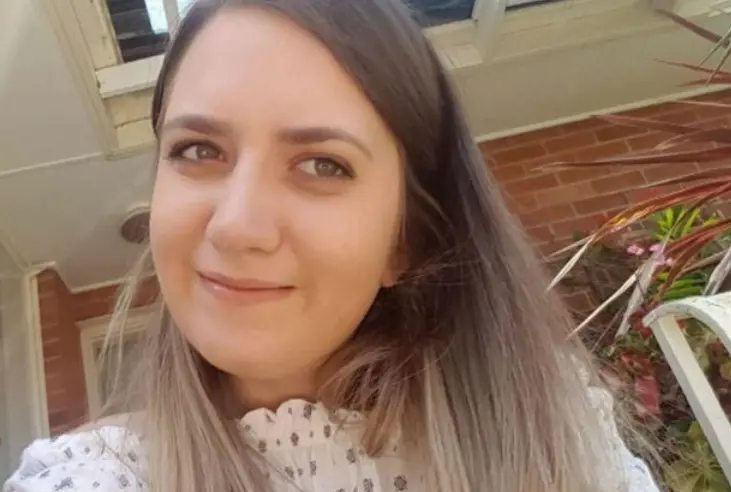
The Courtney Herron incident was a real shock to the whole of Australia. Her violent murder in 2019 went beyond being just another news item; it was a situation that turned into a nationwide talk about women’s safety, homelessness, mental health and justice. To many in Australia, her story represented both a system failure that was supposed to protect the weakest and a demand for lasting reform.
This article revisits Courtney’s life, the events that unfolded that unfortunate night in Melbourne, and the reasons why her legacy is still important to Australians today.
Getting to know Courtney Herron
Courtney Herron was a 25-year-old woman from Melbourne with a kind heart, but she had faced significant challenges. Her friends and family described her as a loving and understanding person, but like many young people who have to deal with life’s difficulties, she was in and out of the mental health system, had a substance problem, she struggled with substance use and occasionally found herself without stable housing.
For quite some time, she had been in the situation of not having any stable place to stay, going from place to place of friends and sometimes sleeping in the open in some areas of Melbourne. Even though she was going through hard times, Courtney was very much loved by the people around her. She was a young woman full of dreams for a better tomorrow.
When tragedy struck in Royal Park
On May 24, 2019, evening, Courtney got introduced to a person called Henry Hammond in the Royal Park of Melbourne. They were both living in the park, and it seems that they knew each other very little.
The next event was very tragic. The Hammon, who was later diagnosed with paranoid schizophrenia, hit Courtney with a tree branch and caused her death by hitting her head fatally. The police characterised the assault as being “horrendous and prolonged,” the duration being almost one hour.
Investigation and arrest
Henry Hammond was promptly identified as the suspect by the police shortly after the corpse was discovered. He was then arrested and charged with murder in the suburb of Parkville, which was close by.
The investigators agreed that Courtney and Hammond had only met just before the attack, and there was no evidence of premeditation. It was an act brought on by severe mental illness instead, which raised questions that were very difficult to answer concerning Australia’s systems that deal with mentally ill people who need psychiatric care and remain untreated.
The court ruling and mental impairment verdict
The Victorian Supreme Court ruled in March 2021 that Henry Hammond was not guilty of the crime of murder due to mental impairment. He was given a 25-year supervision order at a secure psychiatric facility instead of a prison sentence.
Based on their evidence, psychiatrists claimed that Hammond was in a psychotic state during the killing and was not aware of the nature or wrongfulness of his actions.
Although the ruling was in accordance with the law, it left Courtney’s family and most of the public feeling that justice had not really been served. Her father, John Herron, wrote the outcome as “devastating” and asserted that the system had failed not only his daughter but also others who might suffer similar fates.
Public reaction and the national conversation
The death of Courtney Herron happened in a period when Australia was already dealing with the matter of violence against women, which brought to the surface the cases of Eurydice Dixon and Aiia Maasarwe, among others.
The public mourning turned very quickly into a widespread feeling of anger and activism, and the holding of vigils in Melbourne and even beyond the city. The Premier of Victoria, Daniel Andrews, made a statement that the issue was not about women and their ways but about the violence of men and the silent acceptance of society.
“Premier Daniel Andrews remarked that the issue wasn’t women’s actions or choices, it was about the conduct and accountability of men.”
The debate, which focused on the treatment meted out to women in Australia who are without homes or are in the vulnerable category, was revamped because of the case.
Broader issues: homelessness, mental health, and safety
The death of Courtney has been a wake-up call, revealing the harsh realities of life in the streets of Australia:
- A very high percentage of the women who are homeless suffer from physical and sexual violence or exploitation.
- The mental health services are always very reluctant to help those who are both mentally ill and homeless.
- Intervention systems that aim to prevent such tragedies through community outreach, crisis accommodation, and hospital mental health responses remain underfunded and very poorly coordinated.
The experts insisted on the need of having a more coordinated approach that would combine housing, mental health support, and social care so that tragedies similar to Courtney’s are prevented rather than punished.
Remembering Courtney Herron
For many Australians, the name Courtney represents the good side of humanity, the fight to survive and the changes in the law. Apart from being very popular poetically, her story is also used in public commemorations, murals and gender-based violence advocacy.
The Melbourne artists, who worked on the wall in her memory, are spreading her name in such a manner that it will always be associated with the cause and will also serve as a reminder of the effort still needed.
At a vigil in Royal Park, a sign read:
“Courtney was one of us. She deserved safety, love, and a home.”
What did Australians learned from her story?
Courtney’s case, to many, signals a horrible intersection among women, class, and mental health in Australia. The takeaways are tough but unavoidable:
- Women’s safety must be treated as a public priority, not a private issue.
- The mental health facilities should receive better funding, earlier intervention, and more coordination with housing and police.
- The power of empathy and awareness can win: people should know that if one is homeless or addicted, it does not mean he/she is invisible or unworthy.
How Australia continues to respond
Starting from 2019, the mental health reform funding has been increased by the Victorian Government, especially after the Royal Commission into Victoria’s Mental Health System (2021). While some community programs have enhanced crisis outreach for women living on the streets, others have not been so effective.
Nevertheless, the advocates claim that the growth remains inconsistent and slow. As long as there are such cases as that of Courtney Herron, Australians will not forget that systemic change involves not only the introduction of new policies but also a universal change in attitude – that is, the whole society being committed to displaying understanding and being responsible.
Conclusion
The narrative of Courtney Herron remains a dark memory for Australians. It shows that for every person who is homeless or has mental health problems, a human is behind the figure, someone’s child, friend, or even a relative.
Her death exposed the shortcomings of the system meant to protect the most vulnerable people in society; nevertheless, it also generated a new call for kindness and change. To the people of Australia, remembering Courtney is not only about grieving for her death but also about making it the law that women’s lives should never again be plagued by insecurity or invisibility.