



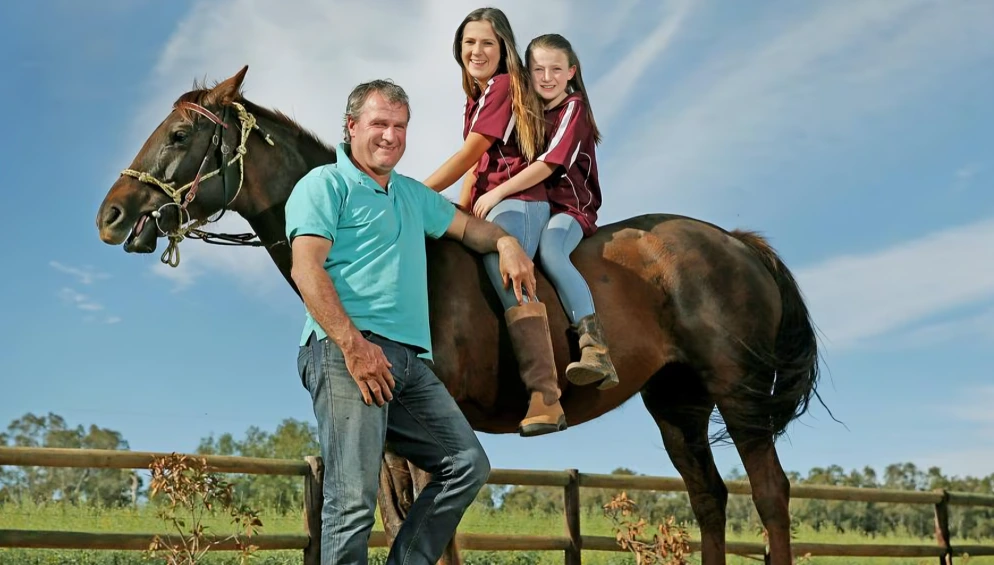
Darren Weir is one of the most well-known and discussed figures in contemporary Australian horse racing. His career has been a dynamic combination of incredible success, record-breaking accomplishments, and a controversial fall that altered the way people talk about integrity and animal welfare in sports. Weir’s story remains one of the most searched and discussed in Australian racing history. He went from humble origins in the country to winning the Melbourne Cup and then receiving lengthy suspensions.
This article examines Darren Weir’s early life, his impressive achievements as a trainer, the circumstances that ultimately ended his career and the enduring impact he’s had on Australian racing.
Early life and entry into horse racing
Darren Weir was born in New Zealand in 1970. From an early age, horses captured his imagination. Like many self-made trainers, his rise was not the result of family connections but of hard work, long hours, and practical experience. He dedicated himself to the stables, absorbing the essentials of horse management, training techniques and the intricacies of racing.
In the early 2000s, Weir moved to Australia, a decision that would ultimately change the landscape of Australian thoroughbred racing. Starting in Warrnambool, Victoria, he gradually earned a name as a trainer capable of transforming horses that others had dismissed.
Building a racing empire in Victoria
By the end of the 2000s, Darren Weir was a significant figure in Victorian racing. He gained considerable respect for his knack for finding affordable horses and moulding them into reliable winners.
Record-breaking success
Weir’s training accomplishments are some of the most impressive in Australian racing:
- Won multiple Victorian Trainers’ Premierships
- More than 3,600 career victories
- Consistently training over 200 winners each season, a record-breaking achievement in Australia
His Warrnambool and Ballarat stables grew quickly, ultimately accommodating hundreds of horses. Horse owners throughout Australia were quick to seek out his services, drawn in by his impressive track record and the attention he devoted to every horse.
Major race wins
Darren Weir trained horses that won several of Australia’s most important races. In 2015, he trained Prince of Penzance to win the Melbourne Cup, making Michelle Payne the first woman to win the race. This was his most notable accomplishment.
Weir trained winners of many Group 1 races in different states, in addition to the Melbourne Cup. His horses did well in the Australian Cup, the Turnbull Stakes, the All-Star Mile, and a number of Oaks and Derby-level races. He trained more than 30 Group 1 victories, making him one of the best trainers of his time.
His training strategy focused on fitness, patience, and precise placement of races, which worked effectively in Australia’s different racing conditions.
Popularity among punters and owners
Darren Weir’s horses consistently drew substantial backing from Australian punters. They were a common sight on the racetrack, especially at country and provincial meetings, which endeared them to those placing bets.
For the owners, Weir provided a professional touch, ensuring they were always in the loop and that their expectations were met. Syndication flourished under his guidance, giving regular Australians the chance to own racehorses that consistently competed and triumphed at a high level.
Controversy and investigations
Darren Weir’s career took a big turn for the worst in early 2019. Police and racing officials raided his houses and found illegal electronic shock devices, which are often called “jiggers.” These devices are not allowed in horse racing and are a major violation of laws about welfare and integrity.
The results made racing officials act right away. Weir was banned from racing for four years because he had banned devices, which meant he couldn’t compete at the highest level. His horses were given to other people, his stable was closed down, and his once-dominant presence disappeared virtually immediately.
More restrictions and legal problems
The argument didn’t end with the first disqualification. After more investigations, more punishments were given for actually using forbidden gadgets on horses during training. Later, video footage made the public’s reaction much stronger and made the breaches seem even worse.
These events led to more bans and made Weir’s fall from grace even worse. He was once seen as a symbol of hard effort and achievement in Australia, but now he is at the centre of arguments about animal care, moral limits, and enforcement in Australian racing.
Life after racing
Since his disqualification, Darren Weir has kept a low public profile. Though his ban officially lapsed in 2023, Australian racing officials are signalling that a comeback to training wouldn’t be easy. In contrast, his former business associates and staff have remained active in the field, though in different roles. Many of the systems Weir created, including data analysis methods and conditioning techniques, are still used in current training programs.
Conclusion
Darren Weir’s rise, from a humble New Zealand stablehand to the peak of Australian horse racing, followed by his fall from grace, is a story that captivates. It captures the sport’s peaks and valleys, the weight of success and the crucial need for honesty in an industry steeped in tradition and passion. His story resonates with Australians, offering more than just a retrospective; it provides crucial insights for the future of racing in this nation.