



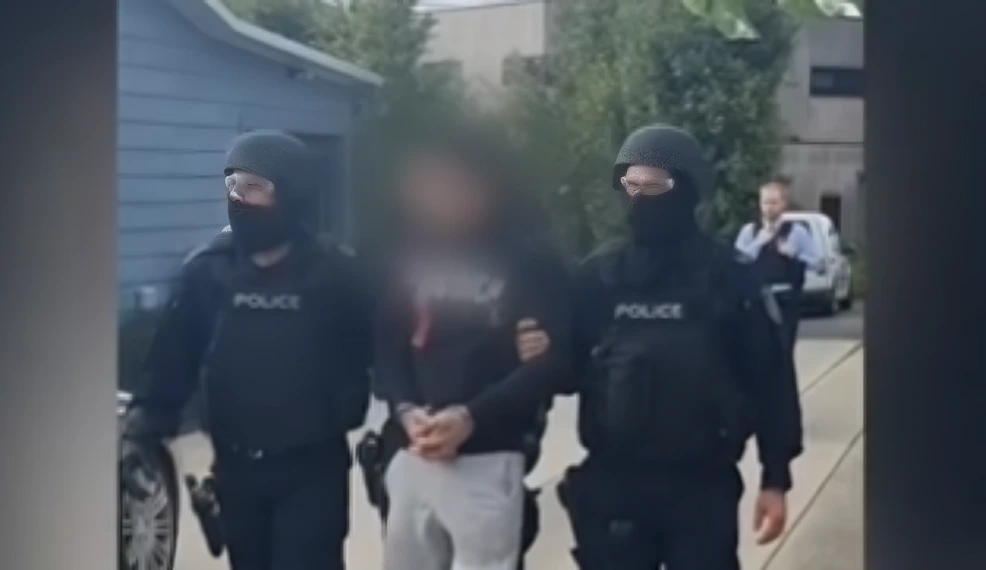
The name of Dominic Saliba became known across New South Wales following a horrific occurrence in Bomaderry in December 2022. What started out as a family get-together ended with the death of a young life and a court fight that gained much public attention. Many Australians, particularly those who live on the NSW South Coast, still find the story of Dominic Saliba quite troubling.
In this article, we look at who Dominic Saliba is, what happened that night, how the courts handled the case and what the verdict means now.
Who Is Dominic Saliba?
Dominic Saliba is a young man from Shoalhaven, New South Wales. When he was 22 years old, there was an incident that made national news. Outside of his close environs, he was little known before the case.
He was charged with killing his cousin, 18-year-old Bailey Jones, but his identity was cleared.
What happened in bomaderry?
It was December 9, 2022, during a private party in Bomaderry on the NSW South Coast. Family and friends had gathered for a quiet evening, or so they had planned.
During the night, an altercation occurred in a garage involving Dominic Saliba and Bailey Jones. Witnesses said the encounter was aggressive but not out of the ordinary for young men. But it moved fast to the next level.
Bailey Jones had been stabbed once, in the chest. Emergency services were called immediately, and despite receiving medical treatment, he later died from his injuries
The tragedy had a devastating impact on both families and the wider community.
Police investigation and charges
Police treated the incident as a homicide. Dominic Saliba was arrested days later and charged with murder.
Police uncovered an illegal and modified handgun hidden in the roof hollow during a home inspection. This resulted in higher charges for unauthorised possession of a firearm.
Saliba was denied bail and has stayed in custody since his arrest in late December 2022.
The Supreme court trial
The case was heard in the Supreme Court of New South Wales in Nowra in early 2025. It was a judge-alone trial; thus, there was no jury. The purpose was to stop media attention from influencing the jurors.
“Dominic Saliba should be found guilty of murder,” prosecutors said. However, the court found that the evidence did not establish beyond reasonable doubt that he meant to kill or inflict serious harm. So the murder case was dismissed.
Dominic Saliba was instead convicted of manslaughter. This implies the court found his conduct contributed to the death of Bailey Jones, but he did not show intent to kill.
Sentencing outcome
Justice Dina Yehia sentenced them on June 30, 2025.
Dominic Saliba was given the following:
- Seven years and nine months in prison for manslaughter.
- A non-parole period of four years and three months
This means he must serve at least that amount of time before becoming eligible for parole. His earliest parole eligibility date is July 2027.
Impact on the shoalhaven community
The death of Bailey Jones has had a deep impact on his family and the larger Shoalhaven community. The victim impact statements described the emotional devastation and ongoing grief experienced by loved ones.
For many Australians, the Dominic Saliba case showed how fast a situation can get out of hand. What began as harmless rough play at a family gathering ended in heartbreaking loss.
The case has spurred wider debates about the following:
- Knife violence
- Alcohol-related disputes
- Youth decision-making
- The legal distinction between murder and manslaughter in New South Wales
Understanding the legal difference
Many Australians have closely followed the story of Dominic Saliba since the charge downgraded from murder to manslaughter.
That is
- To prove murder, we must show that the defendant had the intent to kill or to cause serious bodily harm.
- Manslaughter is when someone murders another person without the intention to kill.
The judge ruled that purpose could not be shown beyond a reasonable doubt and hence the conviction was manslaughter, not murder.
Where things stand now
As at the time of writing, Dominic Saliba is still in detention and serving his sentence. He is eligible for release in July 2027.
While the court process has concluded, the ruling cannot remove the pain experienced by the families involved. The case remains one of the most shocking incidents in recent years on the NSW South Coast.
Conclusion
Dominic Saliba’s situation is a terrible example of how fast things may change and how serious the repercussions may be. It was relatives. It was a time of escalation. That was a legal process that would take years.
For Australians, particularly those in smaller towns, it is a sobering reminder of the long-term impact of violence in families and communities.