



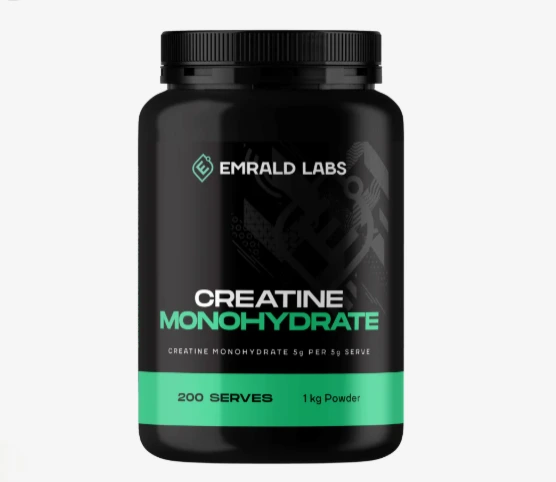
A pharmacist friend of mine in Newcastle showed me her supplement orders for the last twelve months recently. The line that has moved most is not magnesium, collagen or protein powder. It is creatine.
Most of the customers buying it are not athletes. They are not bodybuilders either. They are people in their forties and fifties picking up a tub on the same trip they pick up moisturiser and a prescription refill. Often women. Often new buyers who would have written off the supplement five years ago.
This is the quiet shift that has played out across most Australian pharmacies and supplement retailers over the past year or two. Creatine has stopped being a gym-bro product and become something closer to a household staple. The research caught up with what some clinicians had been suggesting for years, and then the public caught up with the research.
What creatine actually does
Most people who have heard of creatine could not actually say what it does, which is fair enough because the marketing has not helped.
The body makes a small amount of creatine on its own, mostly in the liver. Meat and fish add a bit more. The muscles then store it and use it to regenerate ATP, which is the molecule cells burn for short bursts of effort. Lifting. Sprinting. The last few reps of a heavy set. Climbing a steep flight of stairs without getting destroyed by it.
Supplementing closes the gap between what the body produces, what food provides and what the muscles can actually hold. Three to five grams a day, taken consistently, fills the tank within three to four weeks.
The form most worth taking
For Australians starting from scratch and looking at the shelf for the first time, the question is which form to buy. The answer has not changed in twenty years. Creatine monohydrate. The newer formulations on the shelf, things like ethyl ester or buffered creatine, promise improvements that the trials have not actually verified. They cost more. The form with the deepest evidence base is also the cheapest, which is unusual for a supplement category.
For anyone wanting to compare options without bouncing across five websites, the EliteSupps range of creatine monohydrate is a practical reference for what the Australian market is carrying at what price.
Take three to five grams a day, mixed into whatever drink works. The shake before the gym, the coffee on the way to work, the glass of water before bed. Consistency does the work over weeks, not days.
Why the wider demographic has shifted
The shift in who is buying creatine maps onto two changes in the research.
The first is a longer body of work on older adults, particularly postmenopausal women. Studies in this group have shown meaningful improvements in lean mass and bone density when creatine is paired with even modest resistance training. For a population whose biggest long-term health concerns are falls and fractures, that is a reasonable case for a daily three grams.
The second is the slow accumulation of evidence on cognition. Studies have looked at memory, mood and mental fatigue under conditions that would otherwise impair them, like sleep deprivation, sustained workplace stress or the cognitive fog that arrives with early menopause. The effects have been small but consistent. People who supplement creatine seem to hold up slightly better under those conditions than people who do not.
Neither of these is a dramatic case for a daily supplement on its own. Together, for someone juggling work, family and the usual exhaustion of being a functioning adult, they make the maths worth running.
What the major health authorities say
For anyone who wants to read past the marketing claims and into something more measured, the Mayo Clinic keeps a regularly updated consumer-facing summary of what the research actually shows on creatine, including who it is safe for, who should check with a doctor first and what the dosing looks like in practice. The tone is unhyped. The information is current. It is a useful sense check against any tub that is promising more than the research supports.
The summary has gone through several updates as the women’s-health research has come in, and it now reflects the broader case for creatine across adult populations rather than only athletes.
Who probably should not take it
The current research suggests creatine is safe in healthy adults across long supplementation periods. The exceptions are people with kidney disease or a history of kidney issues, and anyone on medications that affect kidney function. Both groups should run it past a GP before adding it. As with most things, individual medical history changes the calculation.
For everyone else, the case has settled in a different place than where it sat a decade ago.
The household supplement
The most reliable sign that something has moved from fringe to mainstream is when it stops needing explanation at family dinners. Creatine has crossed that line in Australian households this year. The grandmother who started taking it on her physio’s suggestion now asks her daughter to pick up the refill on the way home, and nobody at the table thinks twice.
That is usually how a supplement goes mainstream. Slowly, quietly and then all at once.