



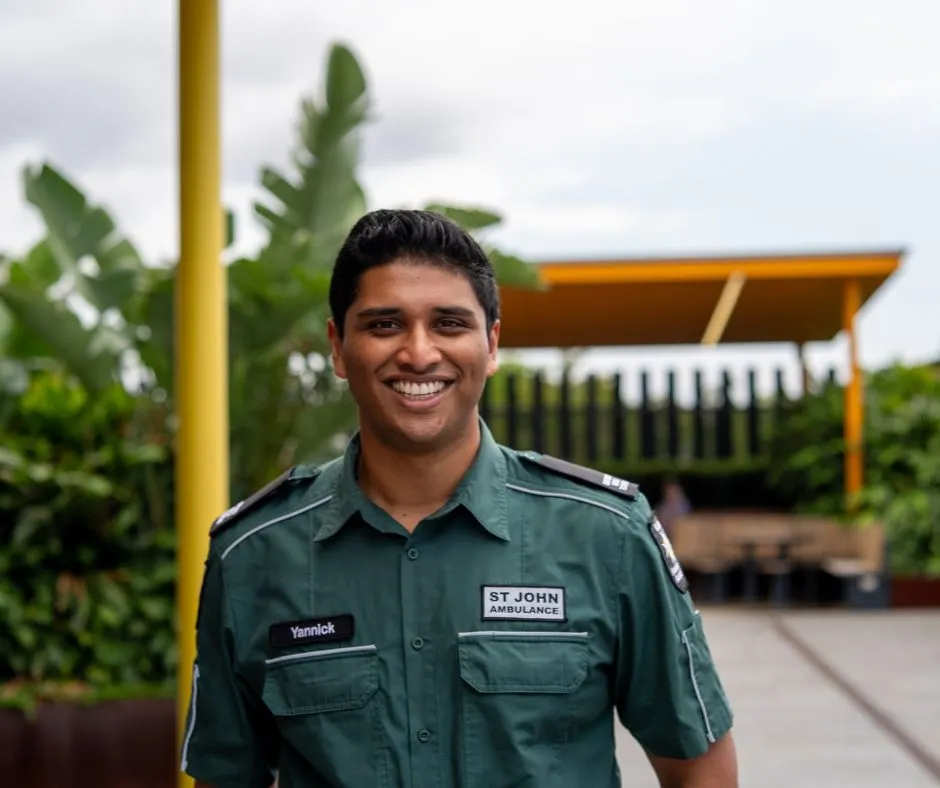
Yannick De Silva is one of the most prominent young medical professionals in Australia. He has earned numerous accolades for his studies and for his participation in community service as well as his dedication to clinical studies. As a young doctor helping to revitalise the medical profession, his journey from student to medical researcher and rural clinician reflects both excellence and the evolving diversity of modern Australian medicine.
Life and Education
Yannick completed his educational journey for his secondary education in Australia and for his tertiary education, he studied at two of Australia’s highest-ranking educational establishments, the University of Sydney and the University of Newcastle. Mr De Silva qualified with a Doctor of Medicine and Medical Science from the University of Newcastle, which laid the groundwork for a career in clinical medicine and medical technology.
Yannick proved to be a student with admirable academic results but he also showed himself to be a young man with exceptional skills and great leadership. Passionate interest in clinical science and in the care of the patients was what distinguished him in his peer group. His university training gave him the unique opportunities of being in major as well as rural Australian health systems, which is vital in appreciating the complexity and diversity of health care in Australia.
University recognition and awards
Yannick’s dedication and performance were recognised through several honours during his time at the University of Newcastle. Among them was the Employability Achievement Award, which recognises students who demonstrate strong career readiness and professional competence.
This award was in recognition of his:
- High performance in clinical placement at rural as well as metropolitan health facilities.
- Exhibited leadership as well as mentorship during his rotation.
- Commitment to clinical practice and learning.
Additional honours included recognition from the Australian and New Zealand College of Anaesthetists (ANZCA) and awards for meritorious contribution to diabetes care in children. To his credit, the record revealed the attributes of excellence with a vision of the goal of improvement in outcomes of patient care while also advancing the education of the profession.
In view of the 2024 impact, a further milestone was achieved with the selection for the graduation address, which further testified to the respect held by his peers and professors.
Rural Health Placement in Australia
One of the most formative experiences in Yannick’s training was his rural placement at the Peel Clinical School in Tamworth, regional New South Wales. Working alongside local healthcare teams exposed him to the unique challenges faced by rural communities, including limited resources and barriers to patient access.
This experience helped Yannick acquire excellent knowledge of the disparity in healthcare offered in urban versus rural Australian health services and regional Australian health services. This experience helped Yannick further his equitable healthcare advocacy whereby all Australians, even those living in rural and remote Australia, are entitled to equitable health services.
Community involvement and volunteering
Outside of his clinical placement, Yannick De Silva devoted years to community health activities. For about six years, he was part of St John’s Ambulance as a volunteer, assisting in community emergency response and in community emergency response training.
Some of his volunteer activities involved:
- Providing first aid at community functions
- Teaching clinical skills like IV cannulation
- Assisting emergency services at community emergencies
All of the above demonstrates the gentler part of medic work, which is also noteworthy: that good medicine is not only about the science of it but also a great deal about the service.
Research contributions
Yannick’s research sought to improve patient care outcomes while he continued his clinical training. One such study examined the time to analgesia and the length of time a patient in pain must wait to receive a pain relief medication in the emergency room.
The research examined documentation patterns and clinical stall points along with potential opportunities to mitigate the negative impacts of clinical stagnation on the efficiency of emergency care delivery in the Australian public hospital emergency care system. His recommendations and conclusions have the potential to improve the emergency care system clinical frameworks designed to mitigate patient suffering.
Yannick’s research demonstrates his ability to combine theory with real-world application to make a positive impact in the healthcare system.
Why Yannick De Silva stands out
Yannick De Silva’s journey so far embodies the three traits of Australia’s medical practitioners; he demonstrates intelligence, empathy, and a willingness to serve. His journey embodies the characteristics that future doctors and students who want to contribute to the health system of the country should have.
Lessons taken from his journey
- Prioritized real-world experiences: Yannick’s focus on the real world demonstrates that clinical confidence grows from hands-on training.
- The importance of giving back: His work with St John’s ambulances also shows the importance of community service.
- Studies propel innovation: With his involvement in healthcare research, Yannick demonstrates how young doctors are capable of fostering improved practices within hospitals.
Yannick’s narrative encourages some future doctors to understand that medicine is much more than learning on a theoretical level. It encompasses curiosity, caring, and a desire to keep improving.
Inspiring the next generation of Australian doctors
Yannick De Silva’s story beautifully showcases the best aspects of the Australian medical education system, specifically the balance between scientific knowledge, practical experience, and the human side of medicine. His journey inspires young Australians to embody the dichotomy of being both scholarly and compassionate.
His dedication to the healthcare system and research is a reminder of the impact one devoted individual can make, not just on the health of a single patient, but on the whole network of healthcare professionals.
Conclusion
Yannick De Silva is a gifted young doctor, but more importantly, he is a representation of the future of healthcare leadership in Australia. His participation in various volunteer activities and research initiatives and his impressive performance at the university spotlight a dedication to medical expertise and serving the community.
With the level of empathy demonstrated during his medical studies and clinical practice, De Silva is a role model for all the doctors and healthcare workers in the Australian community. His journey exemplifies the admirable outcome of dedicated efforts collated to a purpose; that outcome being the betterment of people’s lives, one patient at a time.