



Love, Death & Robots has a strong reputation for pushing the boundaries of what animated storytelling can be, and it has consistently surprised audiences around the world. Few episodes, however, have resonated as strongly as “Jibaro“, the ninth and final episode of Season 3.
This short film, set to premiere on Netflix on May 20, 2022, stands out for its breathtaking graphics, silent plot and deep symbolism. It’s a rare animated film that delivers an emotional punch while still being visually stunning. Jibaro is must-see TV for Australians who enjoy bold, intellectually interesting stories.
The story behind “Jibaro”
The episode opens in a lush forest where a group of armoured knights approach a shimmering lake. One of them, Jibaro, is a deaf soldier who stands out due to his silence.
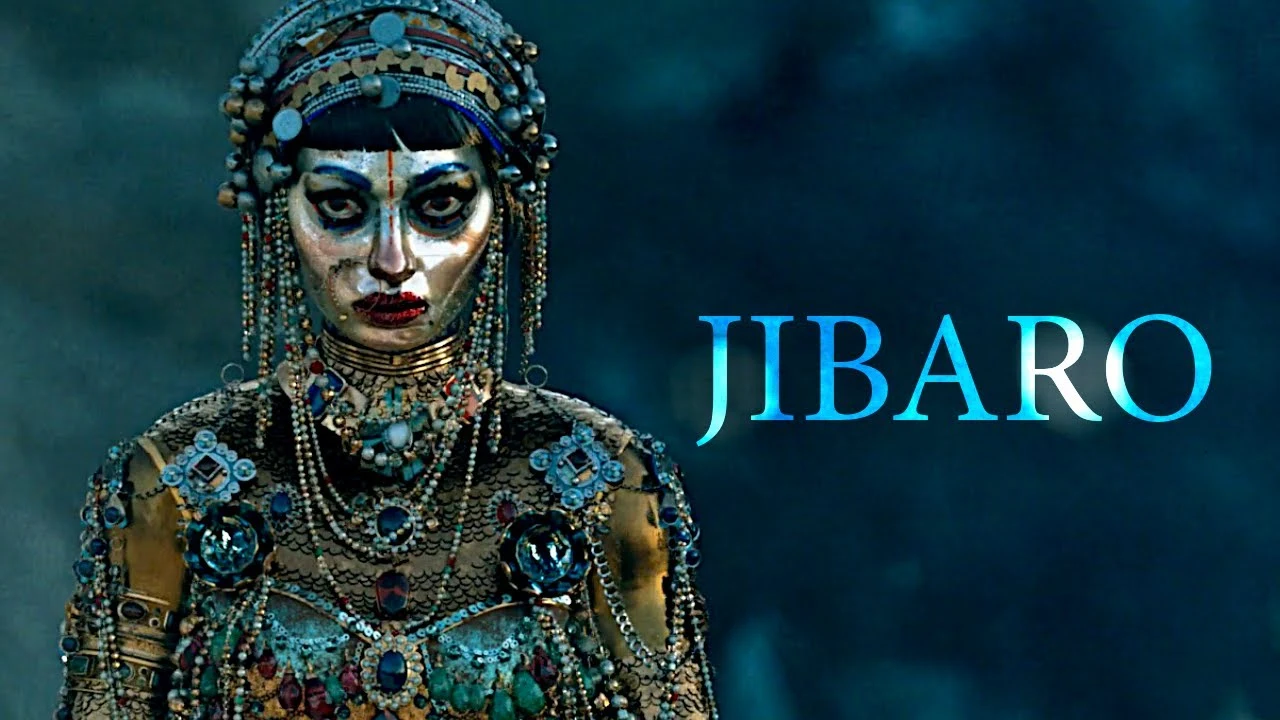
When the siren approaches, wrapped in gold, her voice sends the troops into a coma. They stagger towards her in a wild, chaotic rush, their lust and concentration weighing them down, burdened by their own equipment.
A story told without words
One of Jibaro’s most striking features is its complete lack of dialogue. Every emotion and intention is communicated through movement, voice and the use of facial expressions. The lack of words pushes the audience to concentrate on what is shown rather than what is uttered, a daring artistic choice that emphasises every action and noise.
From the continuous clanging of metal armour to the sound of splashing water and laboured breathing, the episode’s design immerses you in the turmoil. It’s a tremendous sensory experience that Australian audiences who appreciate art-house film and experimental animation will find extremely appealing.
Themes of greed, attraction and destruction
At its core, Jibaro explores themes of greed and temptation. The siren, covered in gold and jewels, becomes a living symbol of desire. Jibaro’s downfall begins when he sees her not as a being, but as a prize to be claimed.
When he attacks her, robs her of her jewellery and abandons her, bloodied in the forest, the episode’s message becomes crystal clear: his greed, not her curse, determines his fate.
Jibaro eventually regains his hearing after drinking from the river, which has become poisoned with the siren’s blood. It is a double-edged sword. He senses the world for the first time, yet this increased awareness makes him vulnerable to the siren’s song.
When the siren’s call returns, its shrillness drives him insane and he is one of many who drown in the lake. This terrible conclusion perfectly portrays a story of how fanaticism and self-interest can lead to the downfall of even the most steady people.
Symbolism and interpretation
The episode’s visual metaphors enable various interpretations. Many reviewers and spectators see Jibaro as an allegory for:
- The destructive nature of greed: Jibaro’s demise exemplifies humanity’s insatiable quest for money and influence.
- Colonial exploitation: The soldiers, the invaders, represent colonisers ruining a natural world that eventually retaliates.
- Toxic relationships: The conflict between love, longing and the desire for control is symbolised by the powerful push and pull between the siren and Jibaro.
- The curse of restored awareness: When Jibaro hears, he loses his innocence and eventually, his life.
Jibaro’s open-ended symbolism is one of the reasons it has appealed to discriminating Australian audiences that value complex artistic storytelling.
The artistry and animation
Jibaro, directed by Alberto Mielgo, also known for his Oscar-winning short film The Windscreen Wiper, is a visual feast. The episode combines hyper-realistic animation with stylised choreography that resembles a dance.
Every frame possesses an artistic flair, from the siren’s gown’s glimmering scales to the forest’s lush greenery. The show’s distinct physicality, accomplished using motion capture and new camera methods, makes it feel like a live ballet rather than a collection of computer gimmicks.
“Jibaro” displays animation’s power to transmit deep emotion beyond language barriers, and it will appeal to anyone who enjoys visually appealing narrative, especially Australian artists, filmmakers and animators.
Why “Jibaro” resonates with Australians
Australian viewers have a well-documented preference for stories that combine mythology, the natural environment and the rawness of human emotion. From Indigenous Dreamtime tales to current Australian cinema, there is a persistent appetite for stories that explore our relationship with the environment and the consequences of greed.
In this context, Jibaro fits seamlessly into Australian storytelling sensibilities. Its exploration of nature’s power, moral decay and inevitable consequences speaks universally, while its haunting visuals and mournful soundscape evoke emotions that transcend cultural boundaries.
Criticism and fan reception
Jibaro has quickly become one of the most talked-about episodes in the Love, Death & Robots series. Critics praised it as a “visual masterpiece” and a “revolution in digital storytelling.”
While some viewers found the fast-paced camera work too much, most think it’s a work of art dangerous, moving and impossible to forget. Fans on Reddit, Letterboxd and Rotten Tomatoes are still breaking apart its layers and many consider it one of the best animated cartoons ever.
Conclusion
“Jibaro” goes beyond the ordinary episode; it’s an immersive experience. It defies traditional storytelling conventions by conveying its emotional core entirely through music, movement and facial expressions.
For Australians who enjoy shows like “Black Mirror”, “Arcane” or “The Mandalorian”, this Netflix short provides something genuinely unique: a work of art that feels both old and current, unsettling yet enthralling.
So, if you’re looking for something special to see tonight, “Jibaro” (Love, Death & Robots: Season 3, Episode 9) is well worth your time. It’s unsettling, unforgettable and a tribute to how far animation can go when creators are prepared to challenge convention.